Outreach
I enjoy bringing the fascinating world of astrophysics and astronomy to a wider audience. I have given public talks at events and venues such as Astronomy on Tap Cologne, Volkssternwarte Köln, and Sternwarte Essen.
If you are interested in any of my talks (see below) or would like to suggest another
topic, please don't hesitate to contact
me!
Sowohl auf Deutsch, as well as in
English!
Upcoming Outreach Events
| Date | Location | Talk | Info |
|---|---|---|---|
| 16 Oct. 2026 | Walter-Hohmann-Sternwarte, Essen | Cosmic Rays - Kleine Teilchen - Große Wirkung | Event page |
| 10 Dec. 2026 | Sternwarte Neanderhöhe Hochdahl, Erkrath-Hochdahl | Von Supernovae & Sternenstaub | Event page |
Past Outreach Events
| Year | Date | Venue | Talk |
|---|---|---|---|
| 2025 | Sep. | Walter-Hohmann-Sternwarte, Essen | Von Supernovae und Sternenstaub |
| Apr. | Walter-Hohmann-Sternwarte, Essen | Das Babyfoto des Universums | |
| Mar. | Volkssternwarte Köln | Das Babyfoto des Universums | |
| Jan. | Astronomy on Tap, Köln | Das Babyfoto des Universums | |
| 2024 | Oct. | Verein für Raumfahrt und Astronomie, Köln | Das Babyfoto des Universums |
| Oct. | Walter-Hohmann-Sternwarte, Essen | Das Universum im Computer | |
| 2023 | Oct. | Astronomy on Tap, Köln | Das Universum im Computer |
| Aug. | Verein für Raumfahrt und Astronomie, Köln | Enthüllung des Galaktischen Theaters | |
| Jul. | MS Wissenschaft, Köln | Ask an Astronomer (Wissenschaftsjahr 2023 - Unser Universum) | |
| 2022 | Nov. | Verein für Raumfahrt und Astronomie, Köln | Das Universum im Computer |
Featured Outreach Talks
-
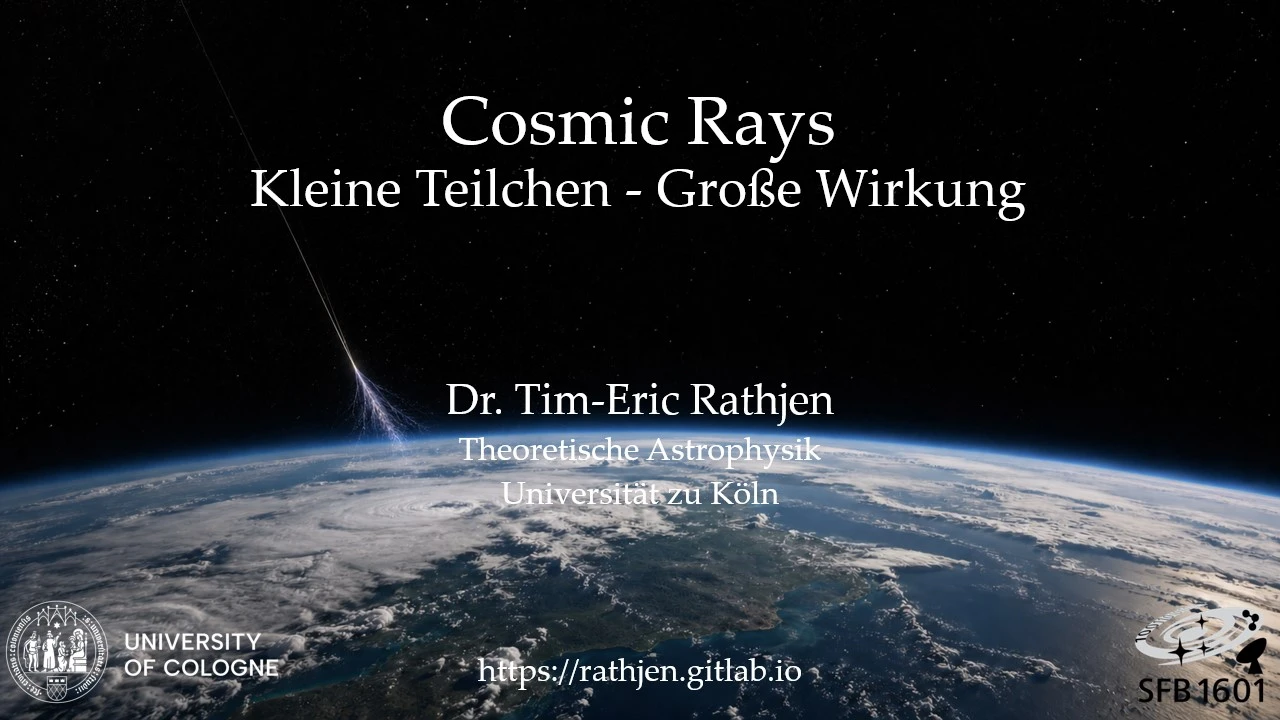
Cosmic Rays
Cosmic Rays (dt.: „Kosmische Strahlung") ist einer der vielen irreführenden Begriffe in der Astronomie: Was hier „Strahlung" genannt wird, sind keine Lichtstrahlen, sondern rasend schnelle geladene Teilchen aus dem Weltall. Doch woher kommen diese Teilchen? Was passiert, wenn sie auf die Erdatmosphäre treffen? Und warum können sie nicht nur etwas über explodierende Sterne verraten, sondern auch über die Entstehung der Elemente und über Einsteins Relativitätstheorie? Und was hat ein italienischer Klempner mit all dem zu tun? Dr. Tim-Eric Rathjen von der Universität zu Köln nimmt Sie in diesem Vortrag mit auf eine Reise von den ersten Entdeckungen der Cosmic Rays bis zu ihrer Rolle in der modernen Astrophysik. Dabei zeigt sich: Diese winzigen Teilchen haben eine erstaunlich große Wirkung - im interstellaren Raum, in unserer Atmosphäre und manchmal sogar in unserem Alltag. -
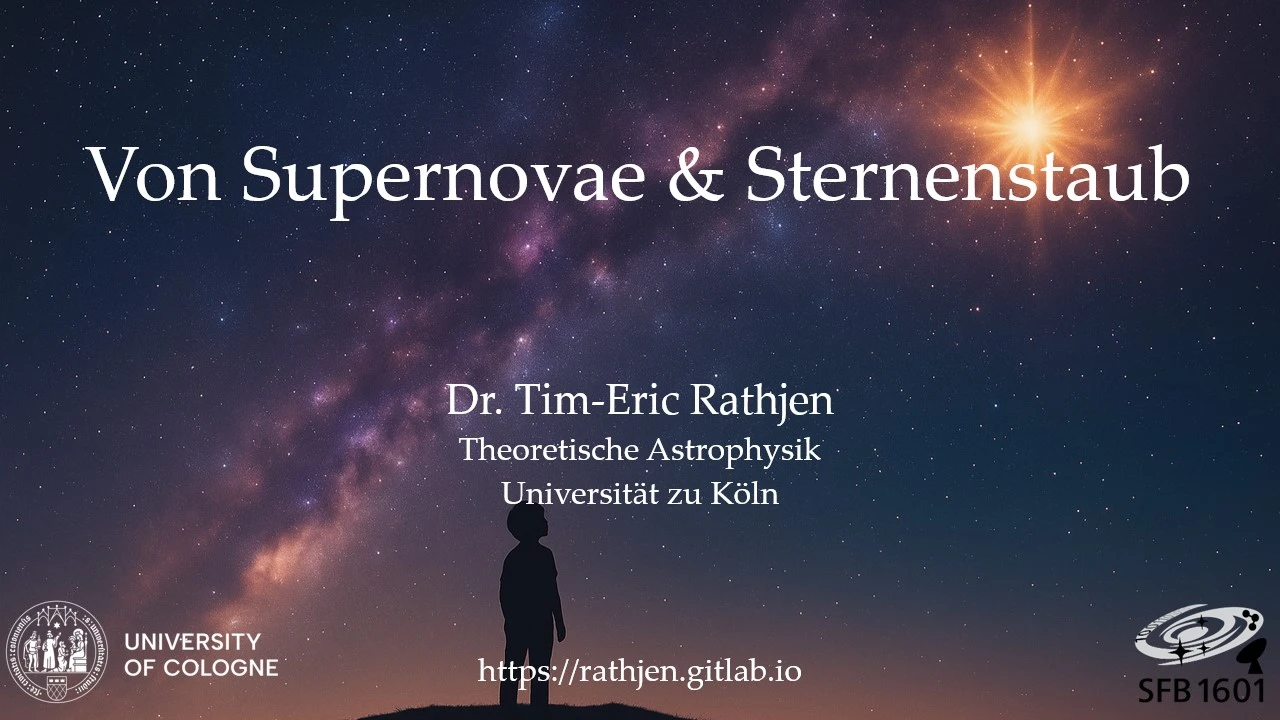
Von Supernovae & Sternenstaub
Woraus bestehen wir, und woher kommt all das eigentlich? In diesem interaktiven Wissenschaftsvortrag nehme ich Sie mit auf eine Reise durch das Leben und Sterben der Sterne, die Entstehung der Elemente und die kosmische Geschichte, die in jedem Atom unseres Körpers steckt. Mit anschaulichen Demonstrationen und interaktiven Fragen ist dies keine Schulstunde, sondern eine Einladung zum Staunen und unsere Verbindung zum Universum neu zu entdecken. -
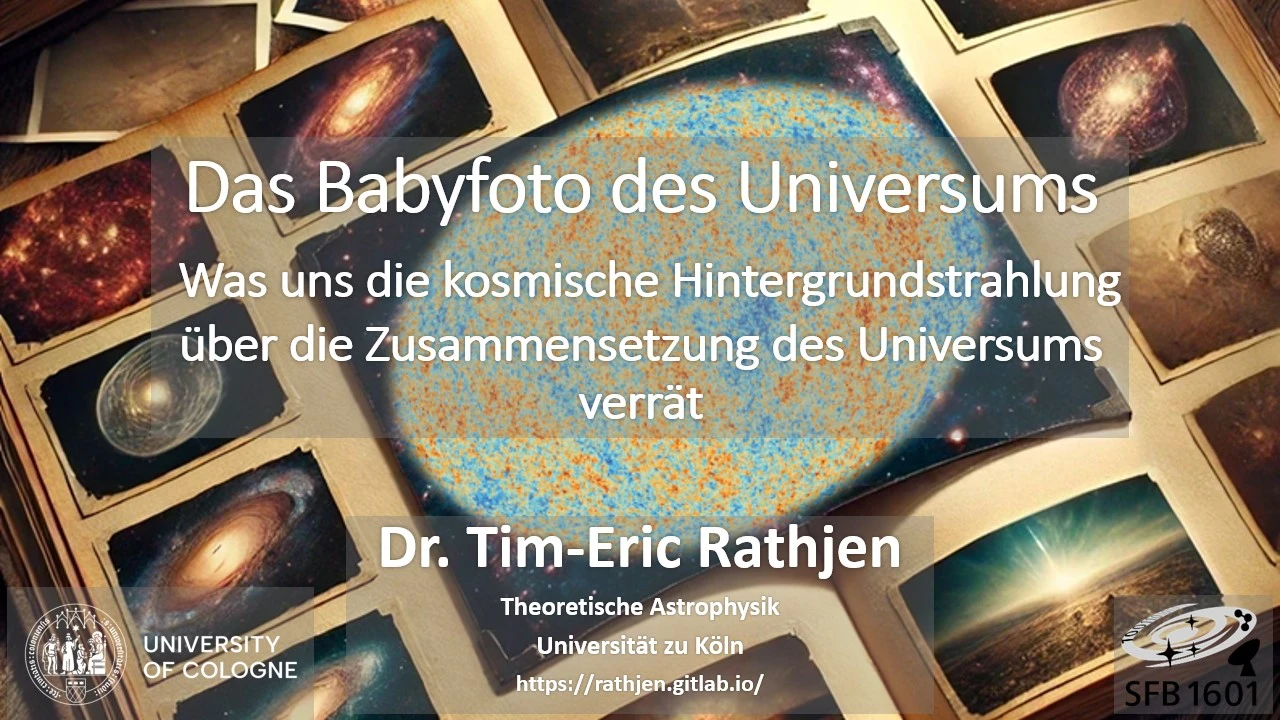
Das Babyfoto des Universums
Die kosmische Hintergrundstrahlung wird oft als das „Babyfoto“ des Universums bezeichnet. In diesem Vortrag begeben wir uns auf eine Reise fast 14 Milliarden Jahre zurück, um zu verstehen, wie diese Strahlung entstanden ist und was sie uns heute über die Zusammensetzung des Universums verrät! -
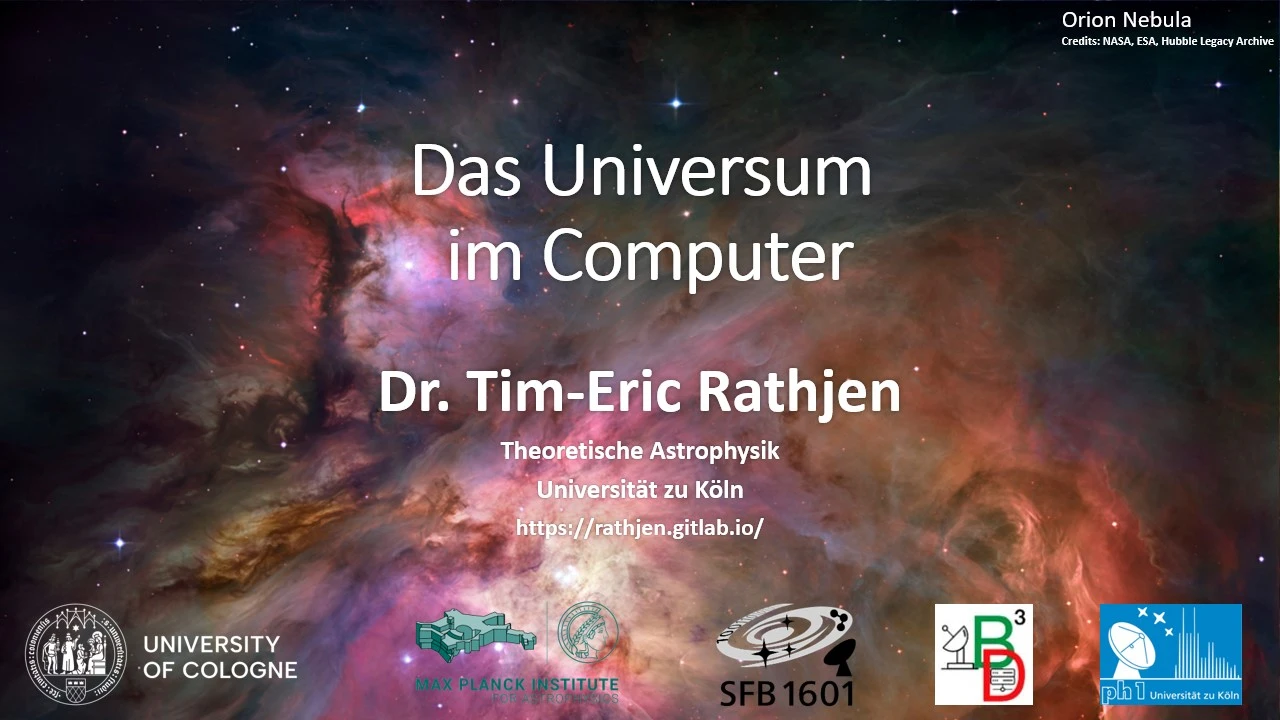
Das Universum im Computer
Was braucht es, um Planeten, Sterne, Galaxien, und ja, das ganze Universum, in einem Supercomputer zu erschaffen? Was macht ein theoretischer Astrophysiker eigentlich, und warum benötigen wir dafür so gewaltige Rechenmaschinen? Dieser Vortrag gibt faszinierende Einblicke in die Welt der numerischen Astrophysik und zeigt eindrucksvolle Bilder und Videos aus einem „Universum im Computer“.
Media
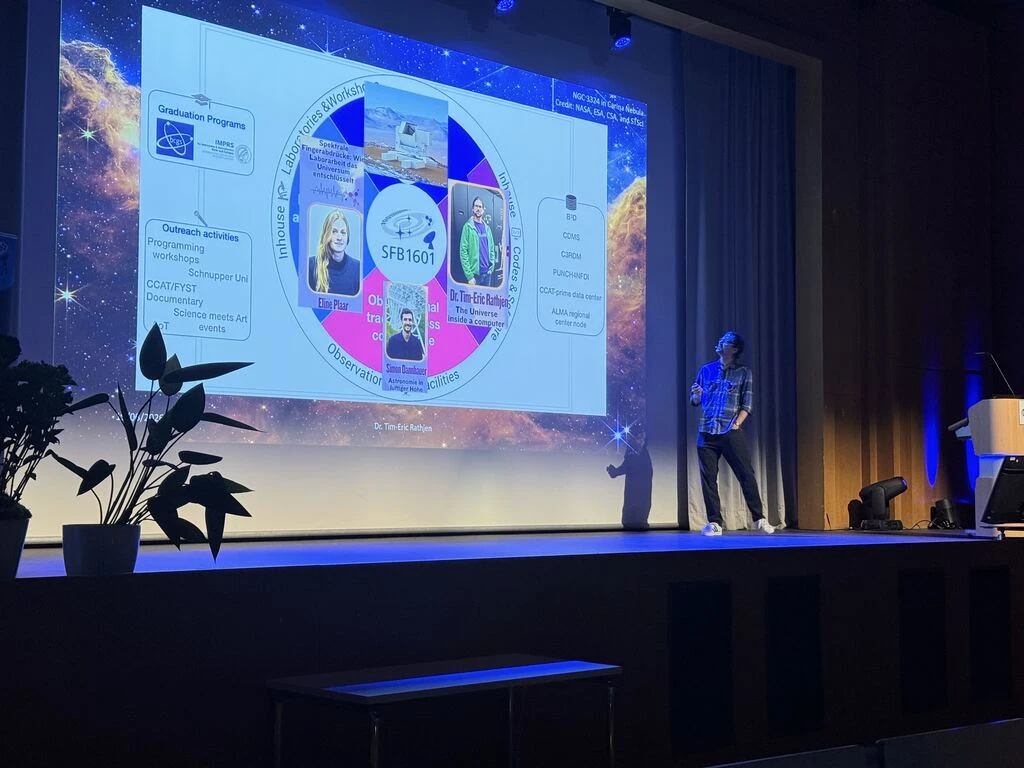
Image caption
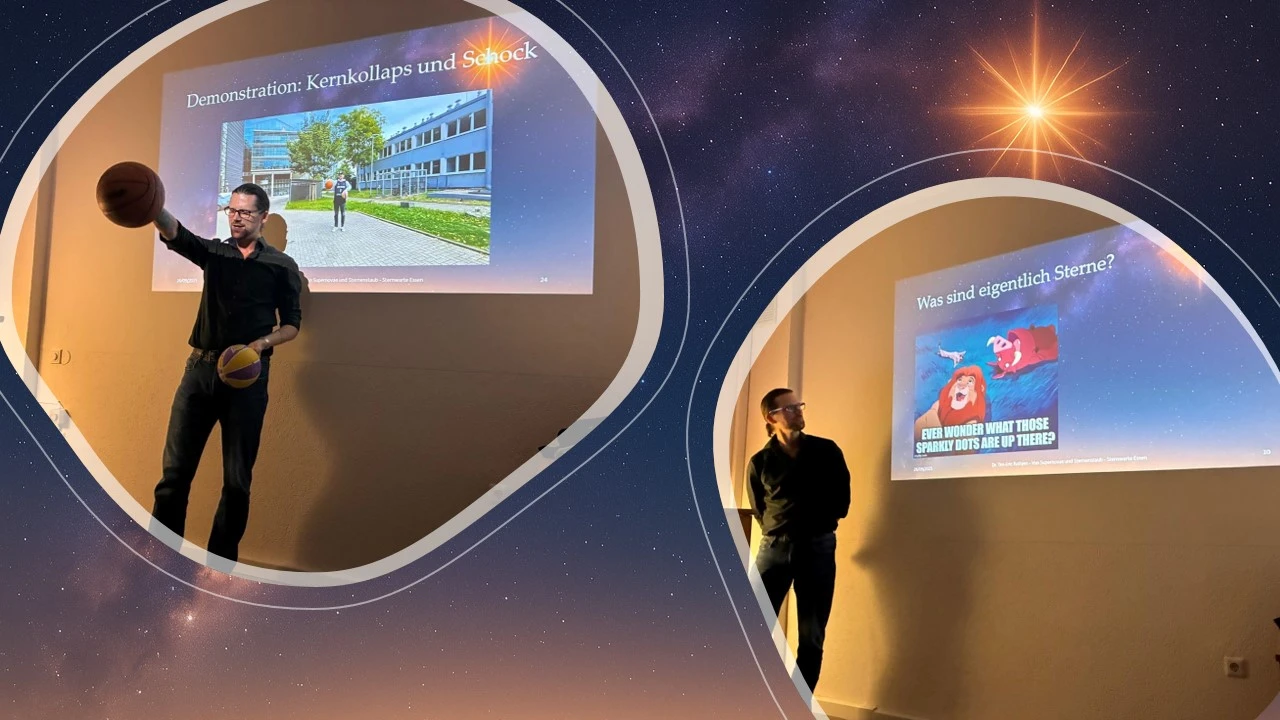
Image caption
Image caption
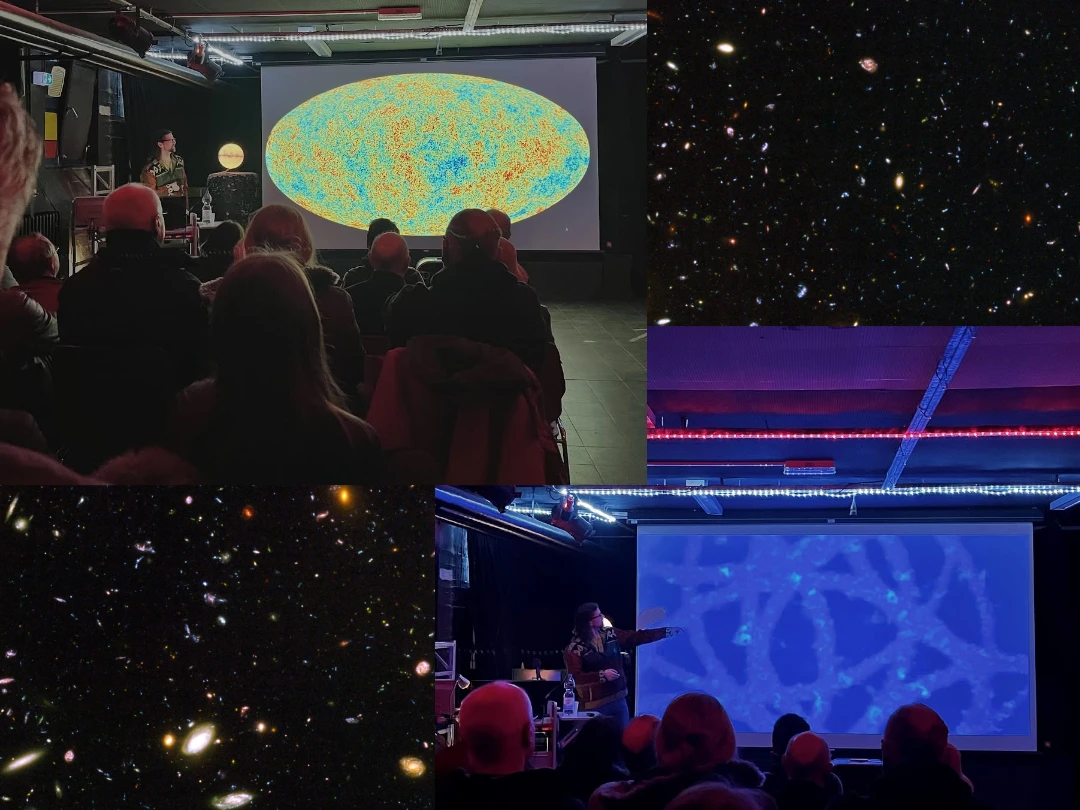
Image caption
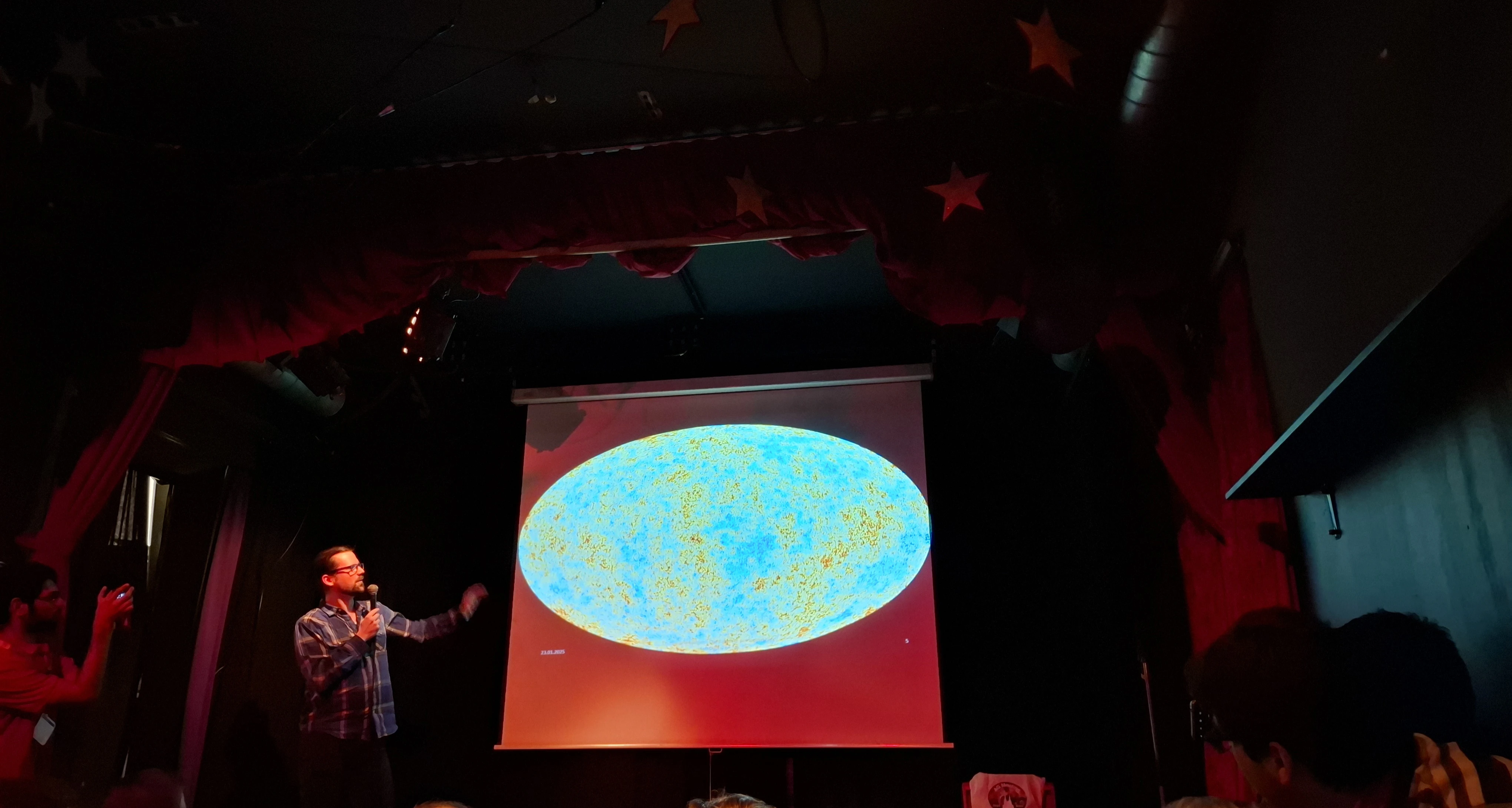
Image caption
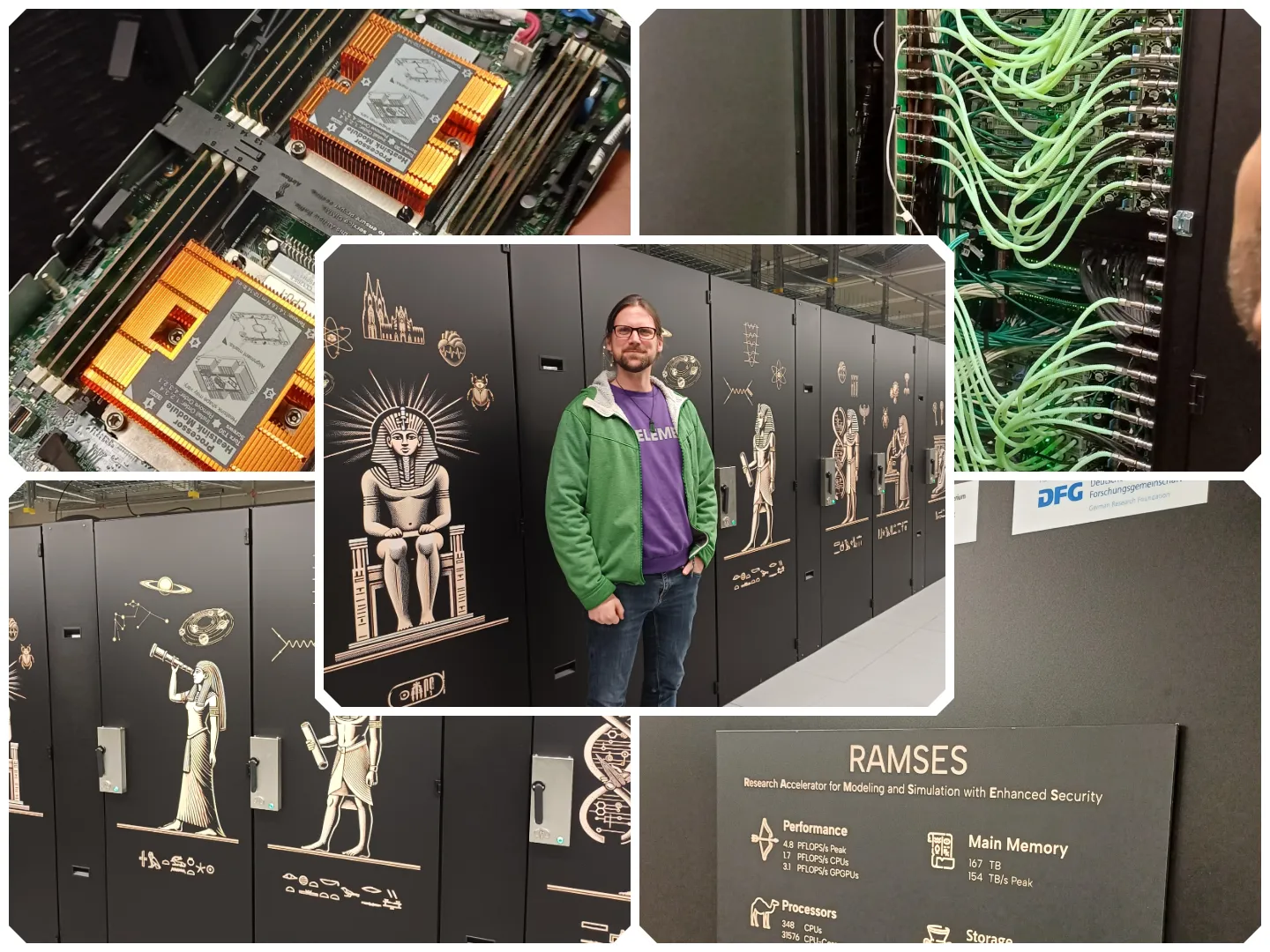
Image caption
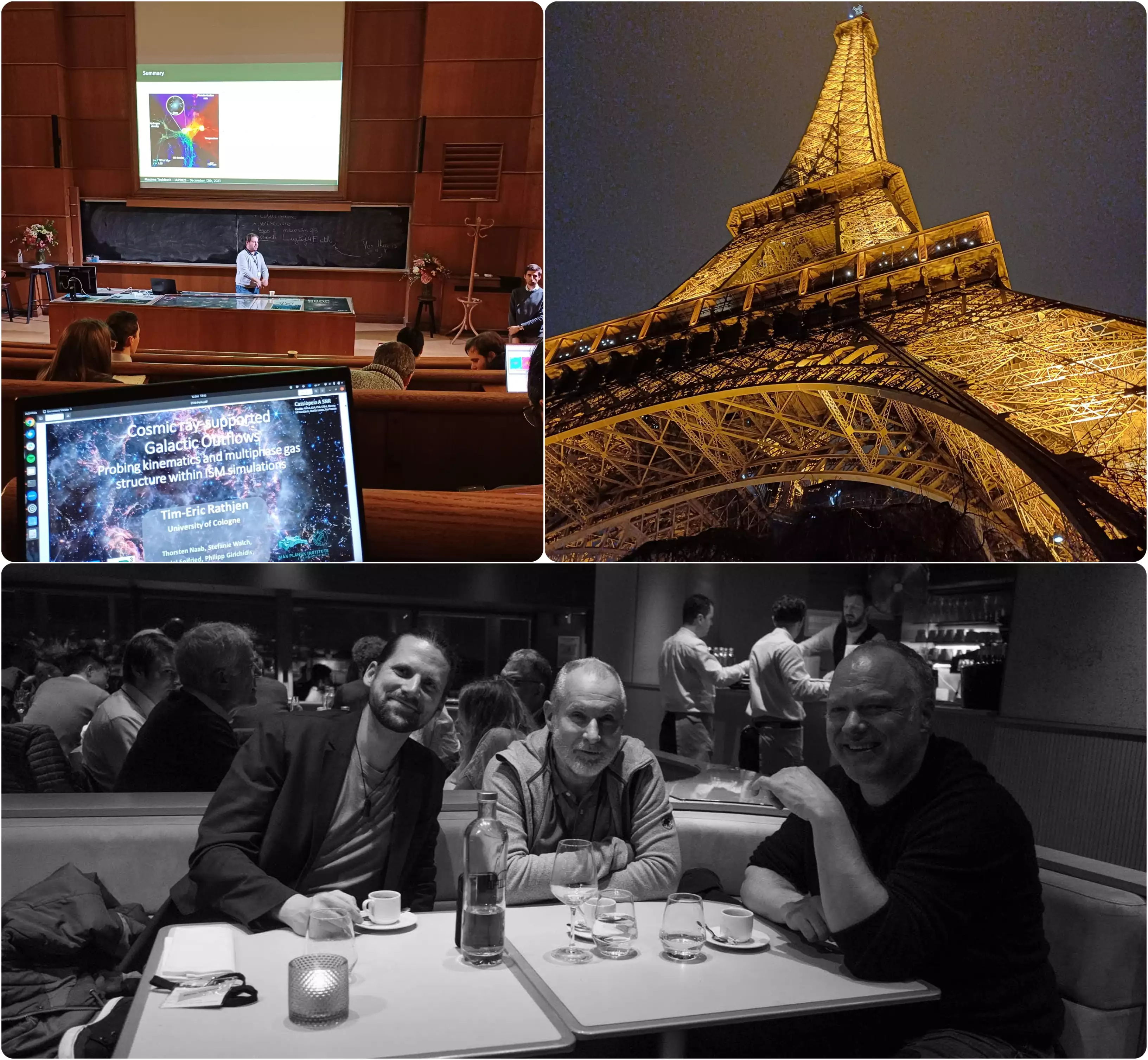
Image caption
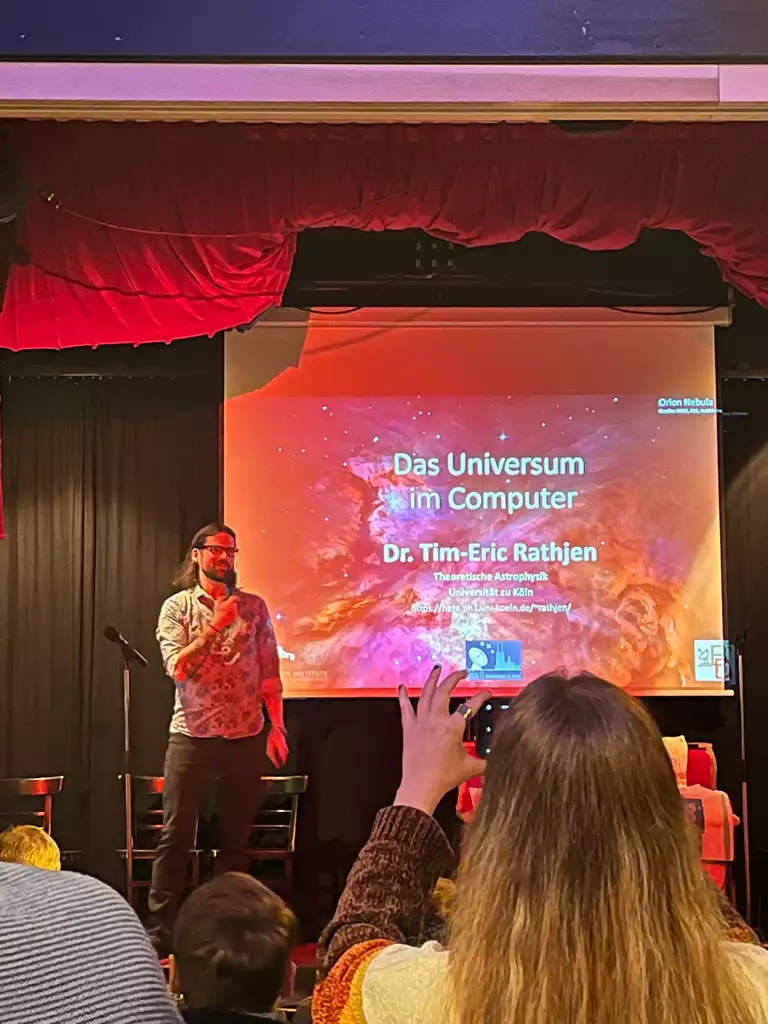
Image caption
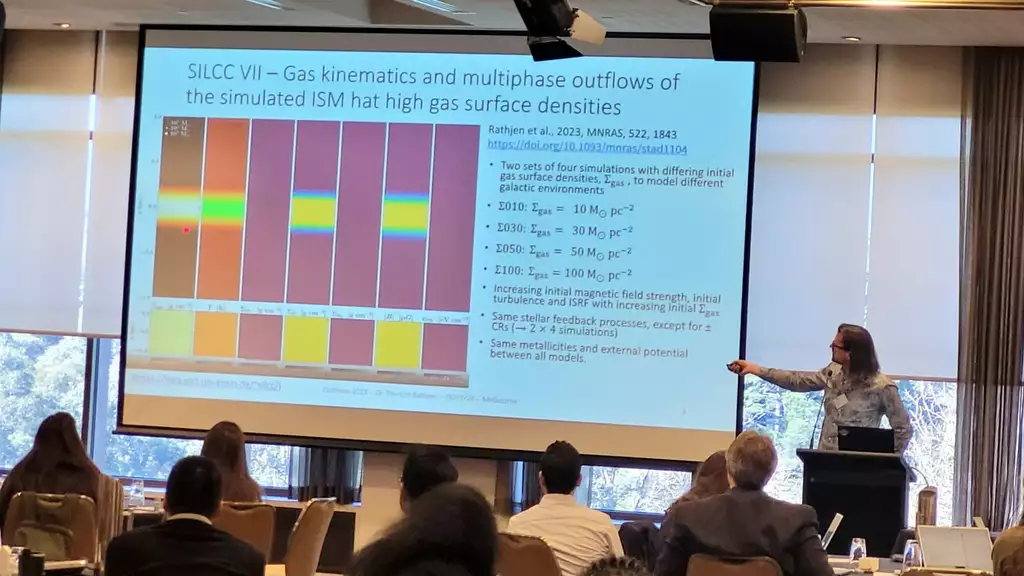
Image caption

Image caption
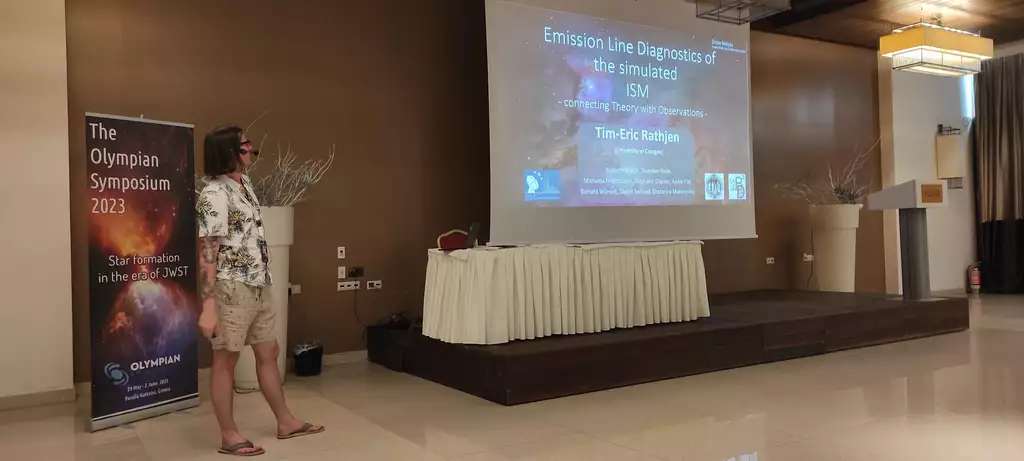
Image caption
Image caption
Image caption
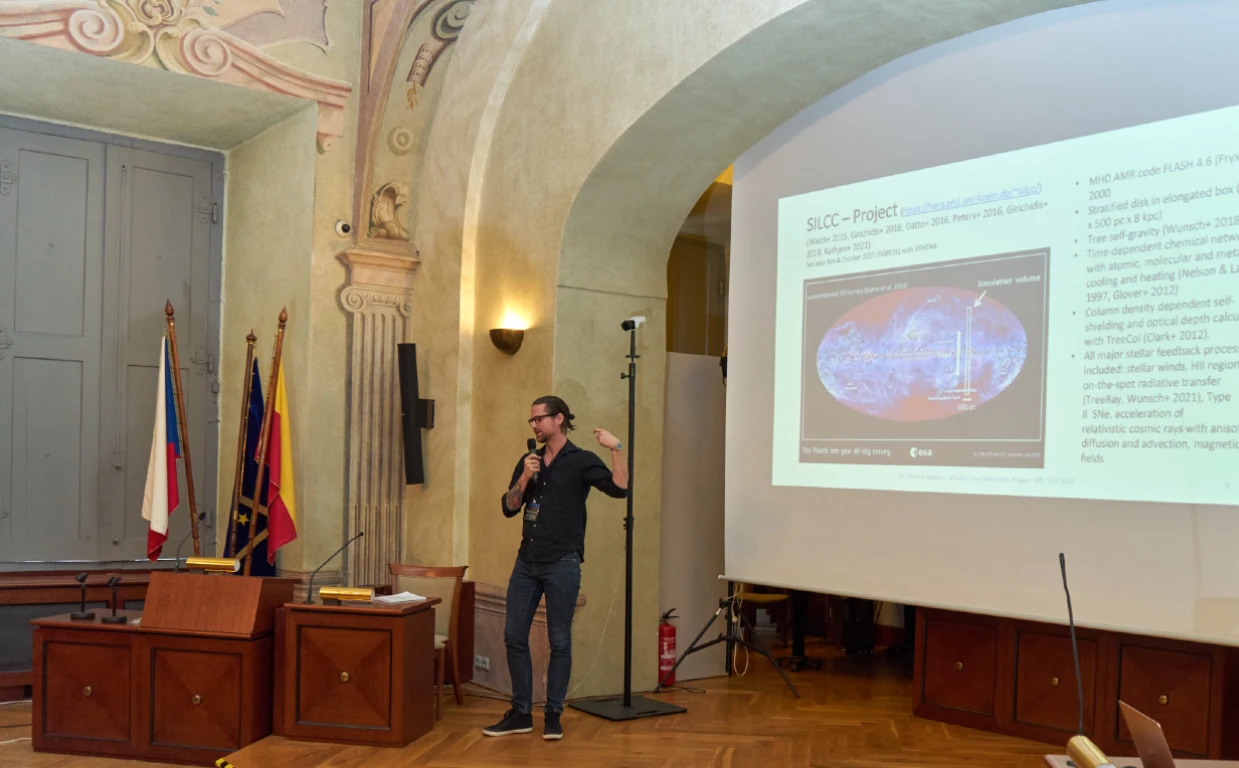
Image caption
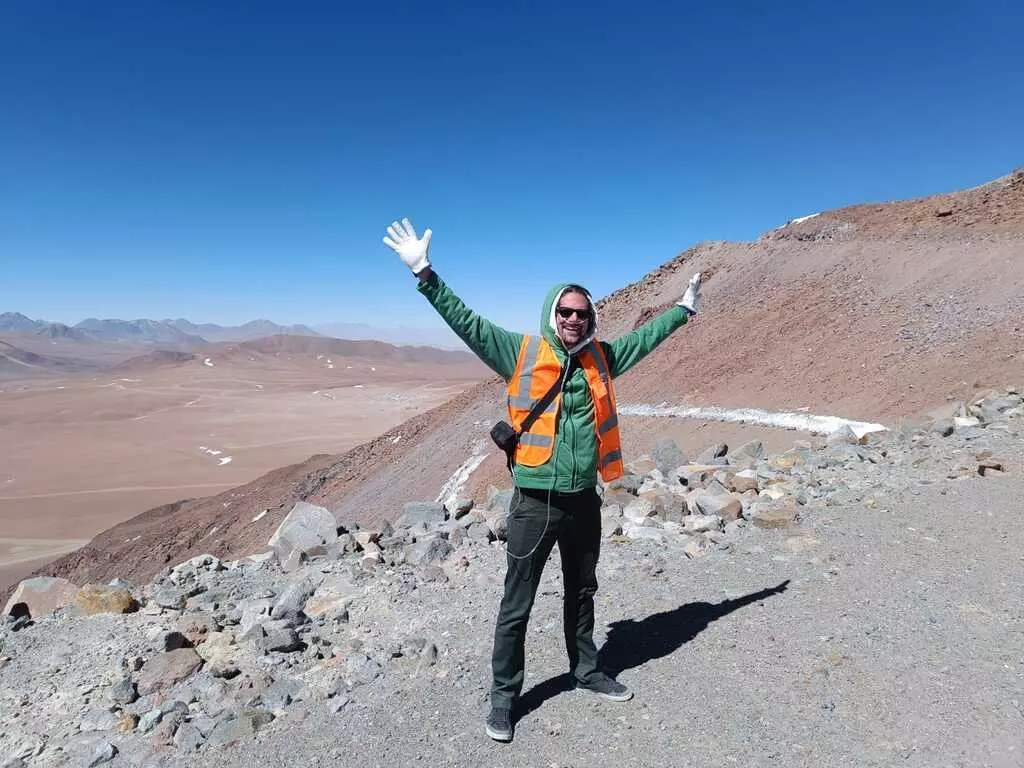
Image caption
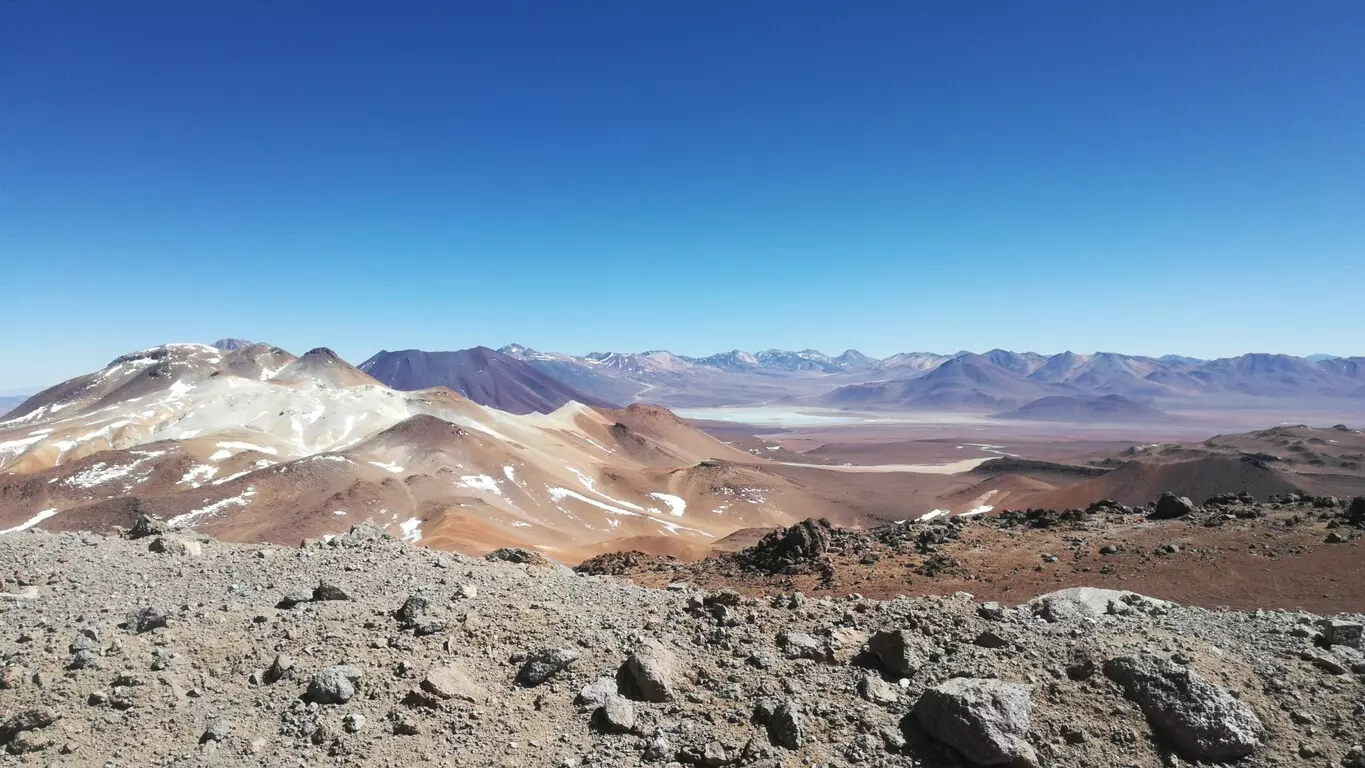
Image caption
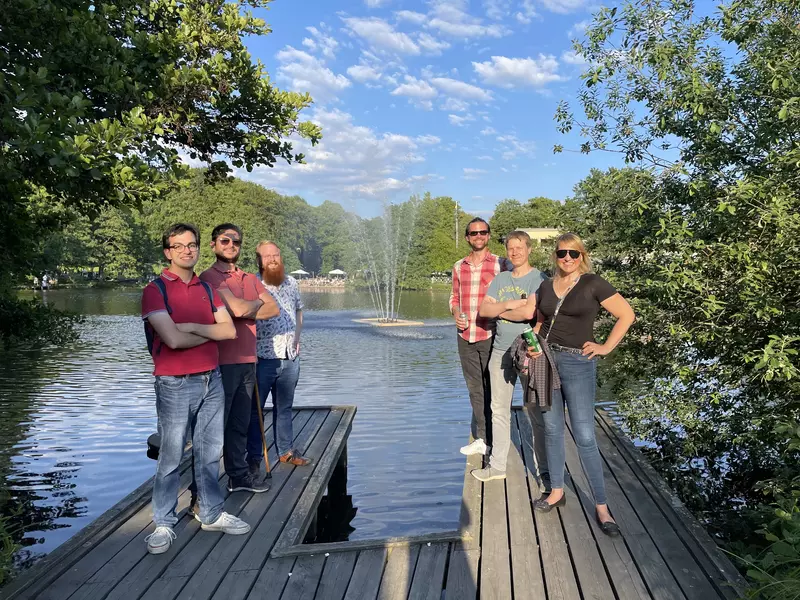
Image caption
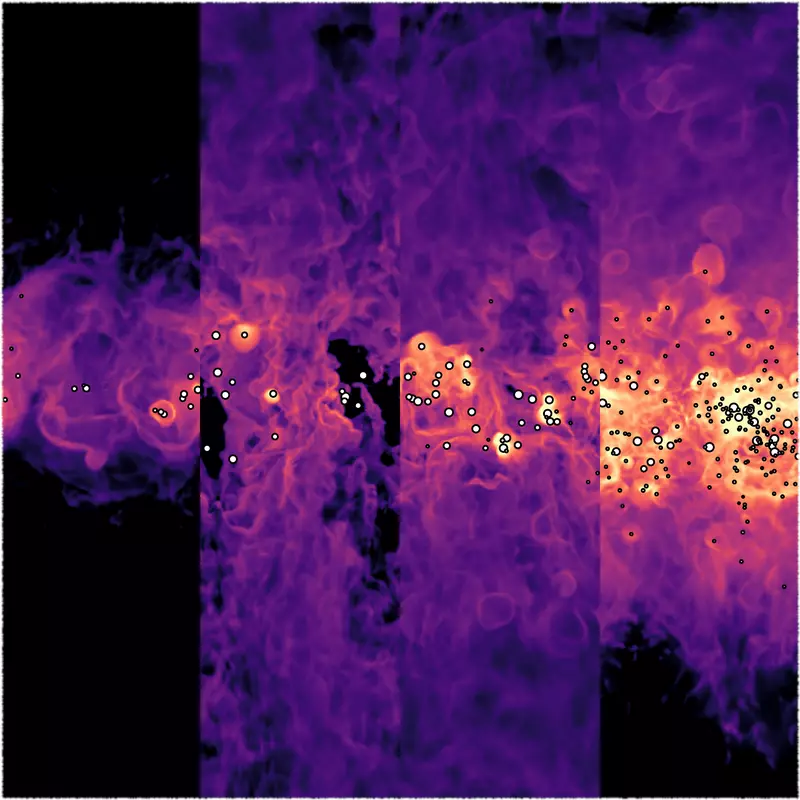
Image caption
Image caption
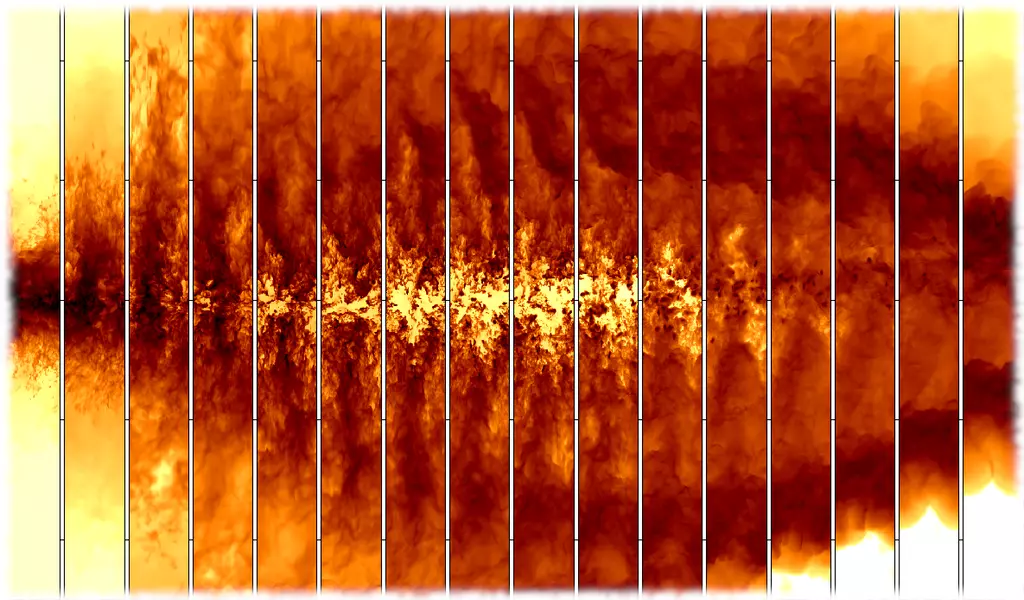
Image caption
Image caption
Image caption
So when I look up at the night sky and I know that, yes, we are part of this Universe, we are in this Universe, but perhaps more important than both of those facts is that the Universe is in us. When I reflect on that fact, I look up, many people feel small - 'cause they're small and the Universe is big - but I feel big because my atoms came from those stars.
Neil deGrasse Tyson